
Feature • Creativity and IT
Blending Creativity and Technology in Higher Education
By Susan Wolff
Problem Analyst, Vanderbijlpark Campus Information Technology
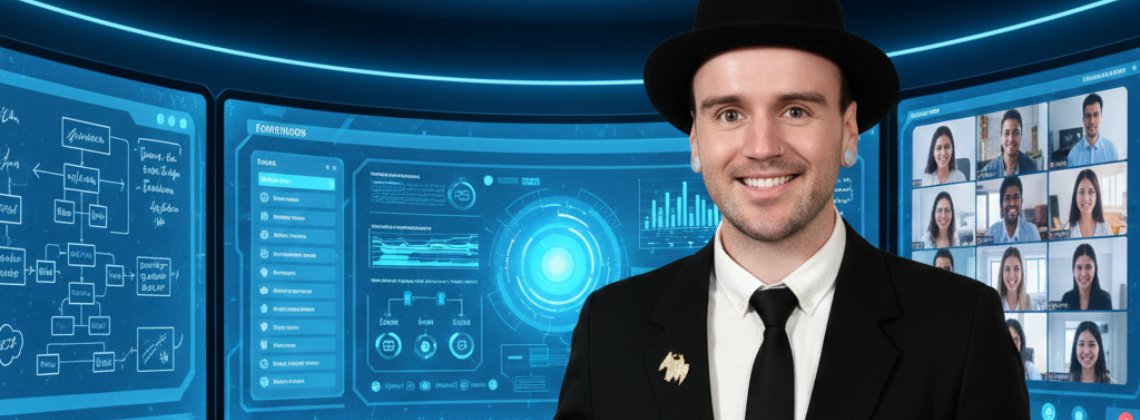
For Lance Bunt, creativity and computing are not separate worlds. At North West University he positions his work at the intersection of design, storytelling and technology. By combining visual thinking with gameful learning, he aims to make complex ideas easier to understand and more engaging for students.
Lance describes design thinking as a structured way to solve problems rather than a loose brainstorm. In his classes he guides students through clear stages: analysing the problem, generating ideas, prototyping solutions and refining them through iteration. This process teaches students to think critically, test their assumptions and design with purpose instead of guessing their way toward an answer.
Digital tools play a central role in this approach. Adobe Illustrator helps him craft strong visual identities and learning assets. Rise 360 and Twine allow him to build interactive experiences that feel like explorations rather than static lessons. Glide supports mobile delivery of content, while Notion and Miro keep multi layered projects organised and collaborative. Together these tools help Lance move smoothly from concept to prototype to a finished experience that students can actually use.
Communication is just as important as aesthetics. Lance believes technology should make communication clearer, not more complicated. Well designed platforms, reliable infrastructure and consistent interfaces help lecturers and students focus on the learning itself. When IT services, design and teaching work together, the result is a learning environment where messages are easy to find, instructions are understandable and students know what is expected of them.
Two of his favourite projects illustrate what is possible when creativity meets educational purpose. CiteSaga is a card game that teaches academic integrity through play, while Prosper introduces students to the Sustainable Development Goals through locally relevant scenarios. Both projects combine design, narrative and curriculum outcomes so that students learn by doing, reflecting and strategising rather than only listening.
Looking ahead, Lance sees the future of creativity in IT as closely connected to adaptability. As artificial intelligence becomes more present in education, he believes that human creativity will become even more valuable. The goal is not to replace creative work with technology, but to use technology to extend what academics and students can do, especially in teaching and learning contexts.
His advice to students who want to enter this blended world of design and technology is practical. Start small but stay consistent. Learn the basics of design and coding, keep experimenting and focus on building tangible projects such as prototypes or simple games. Employers and collaborators look for people who can think critically, work across disciplines and bring ideas to life.
By modelling this mindset in his own work, Lance shows how creative practice can enrich the IT landscape at NWU. When design thinking, digital tools and thoughtful communication meet, technology becomes more than infrastructure. It becomes a medium for curiosity, problem solving and meaningful learning.