
The NWU continues to build a culture rooted in sustainability, responsibility, and community impact through its ongoing commitment to the triple bottom line. This holistic framework which emphasises social, environmental, and economic sustainability remains central to the university’s mission of fostering an ethic of care and meaningful community engagement across its campuses.
Through triple bottom line initiatives, the NWU demonstrates how social, environmental, and economic sustainability work together to create meaningful and long-lasting impact. The recent Arbor Day activities form a key part of this commitment, showcasing how the university actively integrates these principles into its community engagement efforts. By prioritising environmental stewardship, fostering social participation, and investing in long-term ecological wellbeing, the NWU continues to model responsible and forward-focused institutional practice.
Bibi Bouwman, director for sustainability and community impact, says that as part of this commitment, all three NWU campuses proudly participated in the annual Arbor Day events held in September. “These activities not only celebrated the importance of environmental sustainability, but also brought together students, staff, and community partners in a shared effort toward building a greener future.”
In total, 75 trees were planted during the ceremonies, 25 on each campus, marking a significant step toward strengthening the university’s green infrastructure. The initiative focused primarily on planting different species of yellowwood trees, chosen for their ecological value, longevity, and cultural significance in South Africa. As indigenous species, these trees play a vital role in promoting biodiversity, restoring natural habitats, and creating healthier, more resilient campus environments.
The Arbor Day tree planting aligns seamlessly with the university’s triple bottom line approach. Socially, it unites campus communities in a collective act of environmental care. Environmentally, it supports long-term conservation efforts and enhances sustainable land management. Economically, it contributes to long-term cost efficiency by establishing green spaces that reduce heat islands, improve air quality, and require minimal maintenance over time.
Through initiatives such as these, the NWU continues to demonstrate what it means to act with purpose, responsibility, and long-term vision, a testament to the university’s dedication to creating sustainable campuses that will benefit generations to come.

IMPACT@NWU December 2025







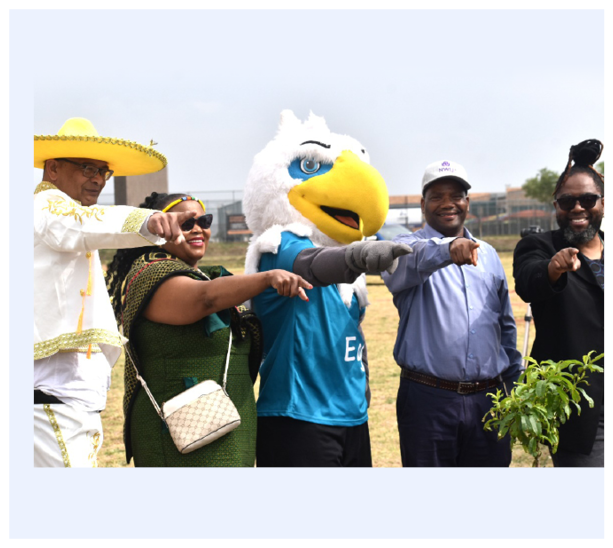
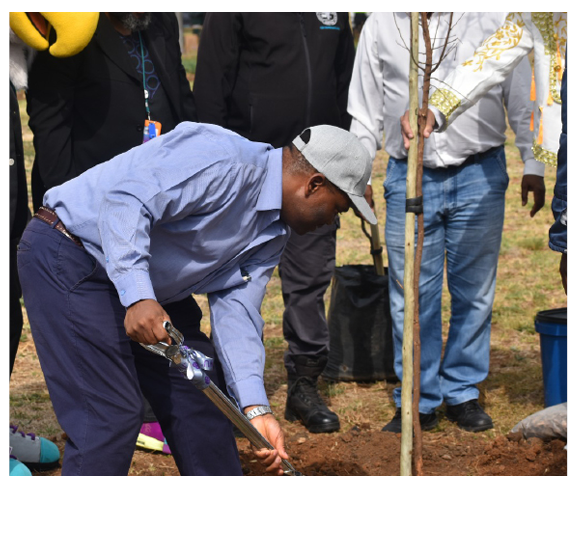
Prof. Jeffrey Mphahlele, deputy vice-chancellor for research and innovation, community engagement, postgraduate studies with the assigned function of the Vanderbijlpark Campus
From left are Chris Williams, Helen Lekalakala, NWU mascot Eagi, Prof. Jeffrey Mphahlele, and Thato Lehutso.
vanderbijlpark CAMPUS
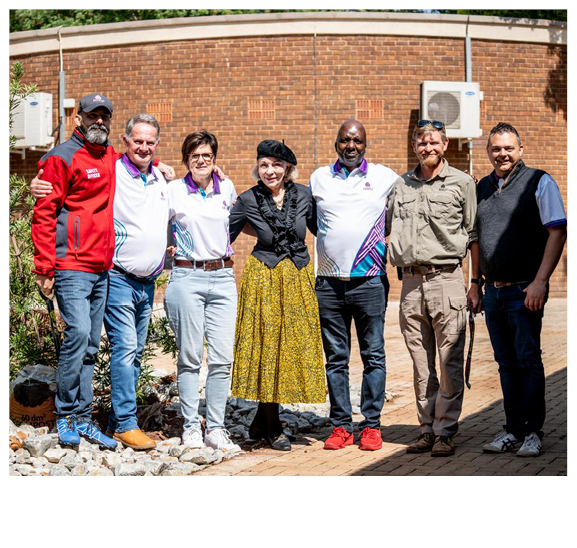
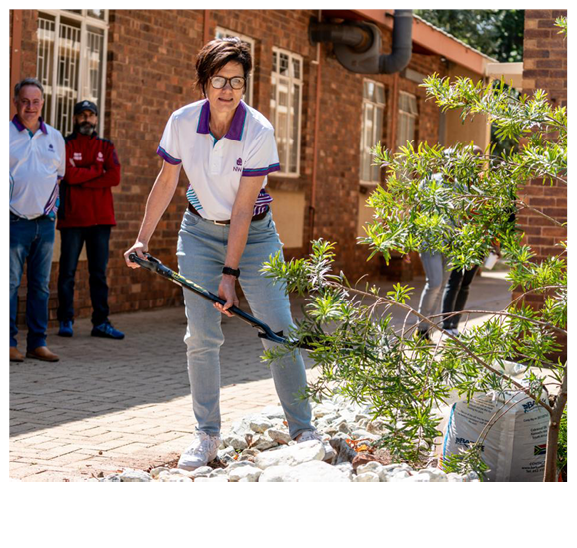
Dr Corrie Rheeder, chief director of the Potchefstroom Campus
From left are Leandro de Beer, Vincent Eastes, Dr Rheeder, Bibi Bouwman, Moss Maswanganye, Marco van Rooyen and Jaco van der Walt.
POTCHEFSTROOM CAMPUS
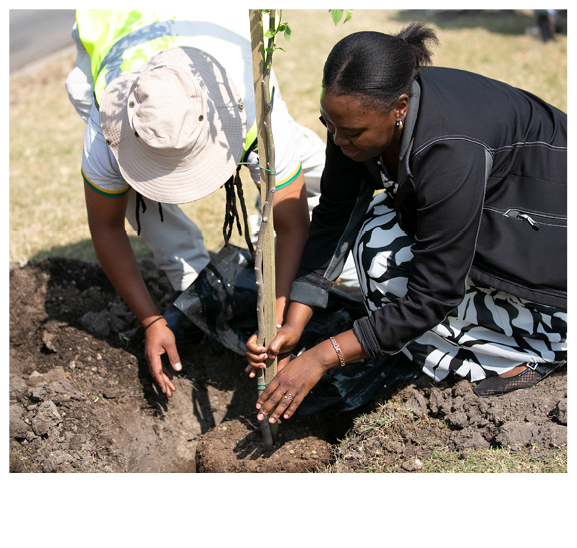
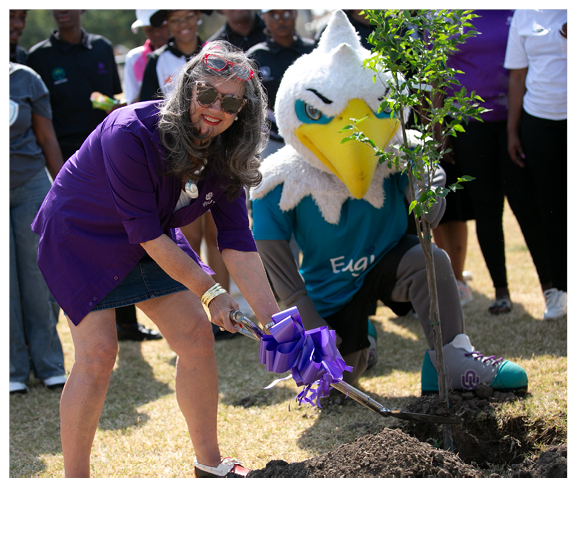
Prof. Sonia Swanepoel, deputy vice-chancellor for student life, transformation, people and culture with the assigned function of the Mahikeng Campus
NWU staff lends a hand in planting a tree.
MAHIKENG CAMPUS